News —
Met brings 400 young Londoners together to help shape the future of stop and search
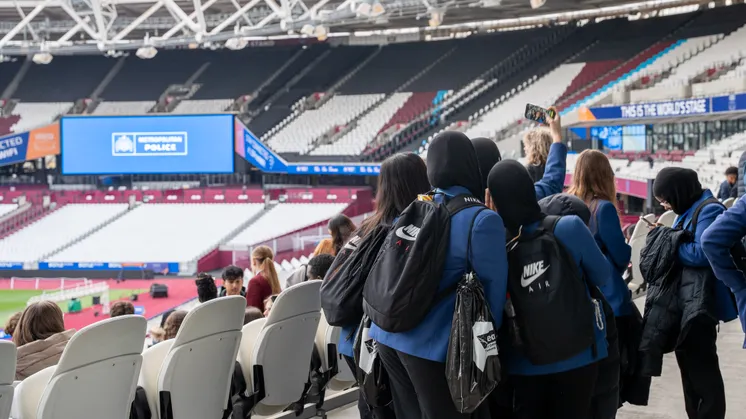
More than 400 young Londoners gathered at the London Stadium today (19 November) to help shape the future of stop and search, as the Metropolitan Police continues work to tackle violence while rebuilding trust and confidence in one of policing's most important powers.
The Met's Youth Summit brought together students from 35 schools, youth organisations, community partners, and police officers for a day of discussion, challenge and learning focused on stop and search, community safety, and preventing violence.
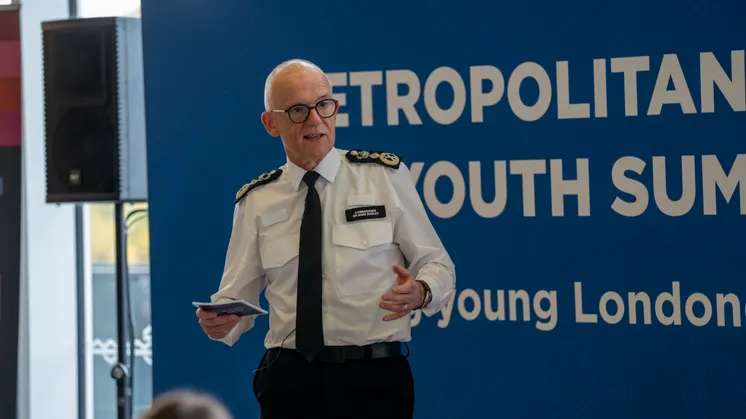
Hosted by Commissioner Sir Mark Rowley and funded by money seized by criminals, the event gave young people the opportunity to share their experiences of policing, learn about their rights and help influence how stop and search is used across London.
Young Londoners took part in a series of interactive workshops, including stop and search scenarios, life skills training, forensic investigations and digital policing demonstrations. Attendees also saw live operational displays showcasing how the Met tackles crime and keeps communities safe.
The summit forms part of the Met's delivery of the Stop and Search Charter, a landmark programme developed following feedback from more than 8,500 Londoners and co-authored by 80 young people. The Charter recognises that while stop and search remains an important tactic in tackling violence, public confidence in how it is used is critical to maintaining policing by consent.
The event comes as the Met continues efforts to tackle serious violence affecting young people across the capital. In 2026, there has been 399 offences where a victim aged 18 or under was injured with a knife, compared with 414 in 2025.
Stop and search remains one of the Met's most important tools in preventing violence and removing dangerous weapons from the streets. Last year, officers removed more than 3,700 weapons from London's streets.
Between June 2025 and May 2026, stop and search activity increased by 18 per cent compared with the previous 12 months. Despite that increase in volume, the Met's Criminality Detection Rate, which measures the proportion of searches resulting in the discovery of prohibited items or evidence of criminality, improved from 33 per cent to 35 per cent. Historically, detection rates have tended to decline as stop and search activity increases, making the improvement a significant achievement.
Complaints relating to stop and search have also fallen, suggesting improvements are being made not only in effectiveness but also in the quality of encounters.
The Met recognises, however, that effectiveness alone is not enough.
Stop and search can be a traumatic experience for those involved and can have a wider impact on community confidence. Concerns about fairness and disproportionality, particularly among Black Londoners, remain and addressing those concerns is central to the Stop and Search Charter.
The Charter was launched in February 2025 and followed the largest public engagement exercise ever undertaken by the Met on stop and search. In August 2026, the Met published its Stop and Search Charter Delivery Plan, setting out 35 commitments designed to improve accountability, transparency and the quality of stop and search encounters.
Since then, the Met has already delivered a number of significant reforms. This includes training more than 30,000 officers and staff on the Charter and the cultural changes needed to support it, introducing mandatory bite-sized learning packages, a new app which requires supervisors to review their team's stop and search encounters, immersive virtual reality training to strengthen officer decision-making, and a new complaints platform to improve transparency and organisational learning.
The Summit represents another key commitment within the Charter programme, ensuring young people remain at the centre of conversations about stop and search and continue to play a direct role in shaping future reforms.
Funded through money seized from criminals under the Proceeds of Crime Act, the event demonstrates how assets recovered from criminal activity can be reinvested into communities, supporting young people, preventing violence and helping create safer neighbourhoods.
Sir Mark Rowley, Commissioner of the Metropolitan Police, said:
"Too many young Londoners still see the devastating impact of violence in their communities, which is why preventing violence remains our number one priority.
"Stop and search is a critical policing tool. Done well, it takes dangerous weapons and drugs off our streets, stops those intent on causing harm and saves lives. Last year alone, officers removed more than 3,700 weapons from London's streets.
"But we also know that how we use these powers matters. The Stop and Search Charter was written with Londoners, including the young people most affected by stop and search, because maintaining public trust and confidence is essential if policing is to be effective.
"Today's summit has been about listening, learning and working together. The police and the public want the same thing: every young person in every community to be safe in London. We'll only achieve that by continuing to build trust and shape policing together."
Notes to editors
Metropolitan Police Youth Summit - delivering on the Stop and Search Charter | Metropolitan Police
- More than 500 young people attended the Met Youth Summit at the London Stadium.
- Representatives attended from 35 schools and youth organisations across London.
- The summit supports delivery of the Met's Stop and Search Charter and Charter Delivery Plan.
- The Charter was informed by feedback from more than 8,500 Londoners and co-authored by 80 young people.
- The Charter Delivery Plan contains 35 commitments to improve the quality, accountability and transparency of stop and search.
- More than 30,000 officers and staff have received Charter-related training.
- Between May 2025 and April 2026, officers removed more than 3,700 weapons from London's streets.
- During the same period, stop and search activity increased by 18 per cent and the Criminality Detection Rate improved from 33 per cent to 35 per cent.
- The summit was funded through money seized from criminals under the Proceeds of Crime Act.
Among community partners at the event was St John Ambulance. The first aid charity ran 30-minute workshops throughout the day on how to stop a life-threatening bleed by packing a wound and using a tourniquet.
Pauline Bartley, St John’s Young Responders Project Manager, said: “We were here today to show young people what they can do to save a life, should the worst happen and they find themselves involved in a knife or other violent street crime incident.
“Our Young Responders programme, which has already taught these vital skills to 25,000 Londoners, is delivered in such a way that the participants feel empowered to act.
“And by setting out the physical and emotional impact of a knife attack, it brings home the dire consequences of carrying knives.”