News —
Record stop and search find rate helps Met remove thousands of weapons from London's streets
New data released today (Monday, 17 August) shows stop and search in London is now identifying criminality more effectively than at any point in the Met's history.
In July, more than a third (36%) of stop and searches resulted in officers finding weapons, drugs or other evidence of offending, the highest find rate ever recorded by the Met.
The tactic remains one of the Met's most important tools for removing weapons from the streets, disrupting criminal activity and preventing violence before it happens. Last year alone, stop and search helped officers seize at least 3,800 weapons and discover illegal drugs on more than 27,800 occasions.
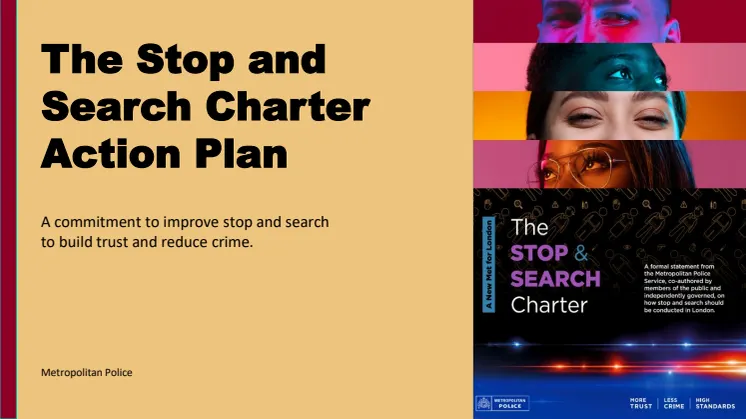
Its use has increased over the past year, with officers carrying out almost 20 per cent more searches. Historically, higher volumes of stop and search have often been associated with lower detection rates. However, the latest figures show officers are making more precise and considered stops, therefore finding evidence of criminality more frequently while conducting more searches. Our approach has been as a result of a new approach to training and increased supervision, shaped by community engagement and feedback that helped inform the Stop and Search Charter Delivery Plan, announced today (17 August).
Assistant Commissioner Ade Adelekan, the Met's stop and search lead, said:
"Stop and search remains a vital tool in helping officers remove weapons from our streets, apprehend dangerous offenders and ultimately save lives. But it is also a tactic that must be used fairly, professionally and with the confidence of the communities we serve.
“We know that concerns around disproportionality remain, particularly among Black Londoners, and we are committed to understanding and addressing those concerns through greater scrutiny, transparency and accountability.
“The new Stop and Search Charter Delivery Plan that our communities have helped us draft is about improving both effectiveness and legitimacy, ensuring officers use these powers professionally, respectfully and lawfully while continuing to keep Londoners safe."
“The results we are seeing show that by focusing on quality rather than simply quantity, we can both improve outcomes and raise standards. The delivery plan sets out how we will continue that work, building trust with Londoners while taking weapons, drugs and dangerous offenders off our streets."
Deputy Mayor for Policing, Kaya Comer-Scwartz, said:
“Stop and search is a key policing tool. Done well, it stops those intent on causing harm and fear in our communities and takes thousands of dangerous weapons and drugs off our streets – preventing violence and saving lives.
“But we have to get the use of this power right in London. It must be intelligence-led, carried out fairly and with respect, as lives and community confidence depend on it.
“That’s why I welcome the Met’s Stop and Search Charter Delivery Plan – which stems from the Baroness Casey Review - and the significant increase in positive outcomes by the Met. The involvement of communities in drafting the plan and research published by the Mayor's Office for Policing and Crime earlier this year, should help the Met develop a better consensus on the use of stop and search between the police and the communities they serve and make it more effective.
"We will continue to monitor the delivery of the plan to ensure it is both effective and fair as we build a safer and fairer London for everyone.”
Sadly, violent crime does not land equally across London. The victimisation rates of young black men is an indictment of the disparities that some areas continue to face.
Young Black men continue to face a significantly higher risk of becoming victims of serious violence in London. In 2026, Black males under 25 were estimated to be 9.1 times more likely to be a victim of murder than their White counterparts. By the end of July this year, 14 of the 21 homicide victims aged under 25 were Black.
These realities continue to shape where and how the Met focuses its efforts to prevent violence and protect those most at risk. As a result, tactics used to tackle serious violence, including stop and search, are more likely to be deployed in the communities most affected by violent crime.
The Met has spent the last year working closely with community groups, charities, youth organisations and Londoners themselves to better understand concerns about stop and search, improve standards and build confidence in how the power is used.
Feedback from those conversations directly informed the Met's first-ever Stop and Search Charter, setting out clear commitments on fairness, professionalism and accountability.
The force is now building on that work through a new Stop and Search Delivery Plan, which brings together 36 separate improvements. The plan is designed to strengthen accountability, improve the quality of encounters and maintain the tactic's role in tackling violence.
The programme includes:
- The rollout of a Met founded QuEST app, requiring supervisors to review the quality of stop and search encounters, to drive up standards. More than 9,000 reviews or 14% of all stops have already taken place.
- New virtual reality training designed to improve officers' decision-making, communication and professionalism during stop and search encounters.
- A new complaints app to improve oversight, transparency and organisational learning.
- Community-led dip sampling of complaints and stop and search records.
- A safeguarding pilot with local authorities to identify missed opportunities to support vulnerable people.
For the first time, stop and search encounters are also being measured against the quality of the interaction, not just compliance with legal requirements. Supervisors are increasingly assessing how officers communicate, explain their grounds, demonstrate respect and engage with members of the public throughout an encounter.
Stop and search is just one part of the Met's wider effort to reduce violence across London, and the practical impact of the tactic can be seen in incidents across the capital. Over the past 18 months, the number of the most serious violent offences has fallen by almost 20 per cent, while the number of lethal gunshot victims has reduced by 27 per cent.
The Met is clear that maintaining public confidence is essential to the continued use of the tactic.
Through increased scrutiny, stronger community involvement and a relentless focus on quality, the force aims to ensure stop and search remains both an effective crime-fighting tool and a policing power that communities can have confidence in, while helping protect those most at risk of serious violence.